Guinea Fowl for Tick Control: Helpful or Hype?
Published: July 04, 2025
This blog reflects my personal perspective on a topic explored in a collaborative, peer-reviewed publication co-authored with Dr. Richard S. Ostfeld and colleagues, published in BioScience (linked below). The views and interpretations shared here are my own and are intended to support accessible, evidence-informed scientific dialogue.
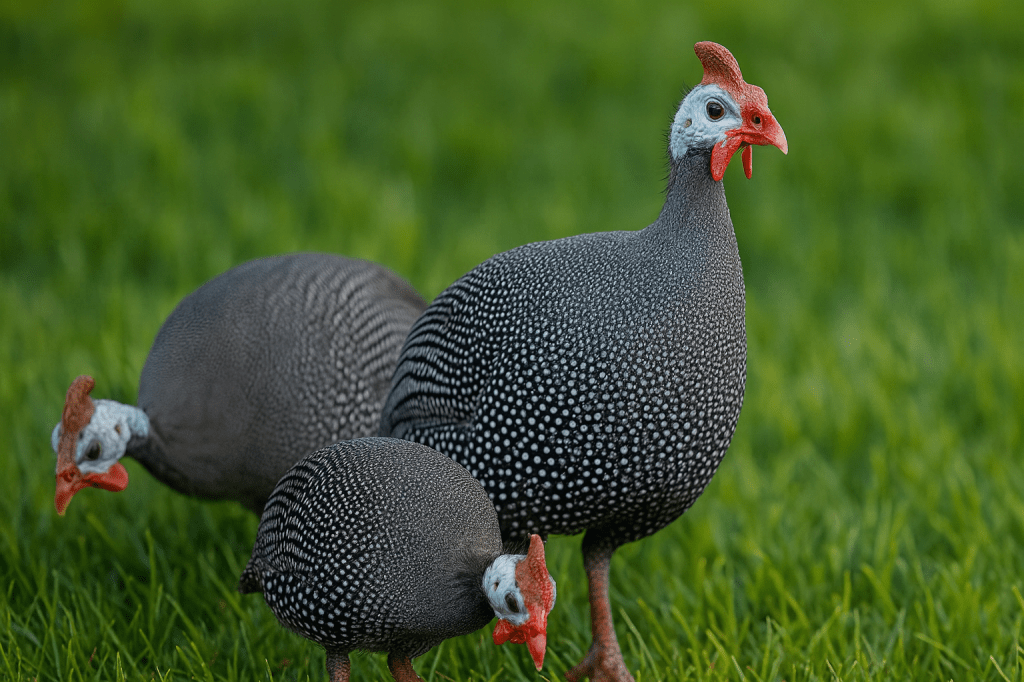
As tick season ramps up and concerns about Lyme disease grow, some homeowners are turning to an unexpected ally: African-native guinea fowl. These insect-loving birds have long been rumored to help reduce tick populations, especially the blacklegged ticks responsible for transmitting Lyme and other tick-borne diseases in the U.S.
guinea fowl’s…reputation can be traced back to a deeply flawed study…
Much of the guinea fowl’s heroic reputation can be traced back to a deeply flawed study conducted in the 1990s on Long Island, and featuring an unexpected investigator in its authorship: supermodel Christie Brinkley. Despite its limited scope and design, the study’s popularity, amplified by Brinkley’s fame, fueled the belief that guinea fowl were an effective natural solution to rising tick concerns. In reality, the science is far less definitive.
In 2006, I conducted a field study in Dutchess County, NY, to explore Brinkley’s conclusions more rigorously. I compared tick densities on properties with and without free-ranging guinea fowl, sampling both adult and juvenile ticks during their two most active seasons and across three habitat types: lawn interiors, lawn peripheries, and forest edges.
What I found was nuanced. While adult tick densities were significantly lower in forest-edge habitats with guinea fowl present, the birds had little to no impact on juvenile (nymph) tick densities. This early life stage poses the greatest risk to human health, as these poppyseed-sized ticks are virtually undetectable to the untrained eye. My results suggested that guinea fowl may reduce the number of adult ticks actively seeking hosts, but they are unlikely to meaningfully reduce the risk of acquiring Lyme disease.
The deeper I looked, the more the cost-benefit ratio seemed to diminish. While the birds do eat ticks, their supplemental feed (typically corn-based) can attract deer and rodents — the ticks’ favorite furry chauffeurs and mobile buffet — potentially undermining any benefit by shuttling more tick carriers onto the property. In fact, we observed significantly more adult ticks on lawn interiors with guinea fowl than on those without.
And then there’s the matter of noise and ecological impact. Guinea fowl, non-native to North America, are notoriously loud and disruptive — their relentless vocalizations can quickly wear out their welcome among nearby neighbors.
…guinea fowl might be helpful, but they’re not a silver bullet.
In short, guinea fowl might be helpful, but they’re not a silver bullet. They may reduce adult tick activity in very targeted areas, but should be used alongside other tick management strategies such as habitat control, fencing, and personal protection.
This experience cemented for me the importance of balancing scientific curiosity with real-world applicability of natural interventions. While nature often gifts us surprising allies, the answers we seek, especially in public health, are rarely black and white. They are many-layered, much like the ecosystems themselves.
If you’re considering a tick control strategy for your home or community, remember: the quality of the evidence and the credibility of the voice behind it are key to keeping your property and family protected.
Original Research: Ostfeld RS, Cabrejos (Price) A, et al. Controlling Ticks and Tick-borne Zoonoses with Biological and Chemical Agents. BioScience. Available here. Accessed July 3, 2025.

Amber Cabrejos, RN-BSN, MPH
Senior Medical Writing Consultant
Executive Writing Services
contact@executivewritingrn.com | www.executivewritingrn.com
Amber specializes in translating complex science into clear, impactful communication for healthcare leaders, researchers, and policy experts. As a registered nurse with a background in epidemiology and clinical writing, her work bridges scientific rigor and narrative clarity.
Considering a communications strategy that builds credibility without compromising nuance?
Let’s connect:
contact@executivewritingrn.com